



Renovating is exciting, and there is nothing wrong with shaping your home to fit your life. But if you are spending money partly hoping to boost what your home will sell for, it pays to know a hard truth: not every upgrade comes back to you at resale. Some renovations barely move your home’s value, and a few can actually make it harder to sell. Before you swing the hammer, here is a clear-eyed, data-backed look at the home renovations that often do not add the value people expect, why they fall short, and where your money is better spent.
The one rule that explains nearly all of them
If you remember one thing, make it this: do not over-improve for your neighbourhood. Every street has a price ceiling set by comparable homes nearby, and buyers shopping a given area come with a budget shaped by that ceiling. Pour $80,000 into the fanciest kitchen on a block of modest homes and the market simply will not pay you back for it, because buyers in that price range are not looking, or able, to spend more. Almost every renovation below underperforms for some version of this reason: it pushes past what local buyers will pay, or it appeals to too few of them. Keep that lens on as you read.
1. Swimming pools (especially in our climate)
A pool is the classic example of a project that can be wonderful for your lifestyle and poor for your wallet at resale. Industry data generally puts the return on an in-ground pool around 50 percent of its cost, and that is before you factor in years of maintenance, higher summer energy bills, and a possible bump in home insurance. In warm regions where pools get used most of the year, they hold value better. In a four-season market like Brantford, where the swim season is short, a pool is just as likely to read as a maintenance and safety concern to a buyer, particularly families with young kids, as it is a selling feature. If you genuinely want a pool and will enjoy it for years, go for it. Just do not install one expecting it to pay for itself when you sell. (For more, see our guide to buying a home with a pool.)
2. Over-the-top kitchen and bathroom remodels
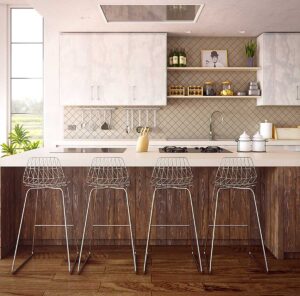
Kitchens and bathrooms absolutely sell homes, but there is a big difference between updating them and gold-plating them. The data is consistent: a minor, mid-range kitchen refresh recoups a strong share of its cost, often 70 to 90 percent or more, while a high-end, gut-it-all luxury kitchen can drop to roughly 30 to 50 percent recouped. The same goes for bathrooms, where spa-like overhauls, whirlpool tubs, marble everywhere, and top-tier fixtures rarely return what they cost. The trap is making one room dramatically fancier than the rest of the house. Instead, aim for clean and current: fresh paint, refaced or repainted cabinets with new hardware, a new faucet and light fixture, and mid-range stainless appliances that appeal to almost everyone. You get the “updated” impression buyers pay for without the luxury price tag they will not.
3. Luxury additions and sunrooms
Bigger is not automatically better. Major additions are among the lowest-returning projects out there: mid-range primary-suite and bathroom additions have been pegged at around 30 percent ROI, and upscale versions even lower. Sunrooms are especially tricky, because they are expensive to build and often are not counted in your home’s official square footage, so there is no guarantee they add measurable value. Additions can also throw off a home’s floor plan or push it out of step with the neighbourhood. If you need more usable space, you will usually do better reworking and refreshing what you already have, or making the most of a deck or patio, than tacking on a costly new room.
4. Converting or removing bedrooms and garages
Buyers shop by bedroom count, and a home’s value is tied directly to it, so anything that reduces the number of usable bedrooms tends to cost you. Turning a small bedroom into a walk-in closet, a home office, or a gym, or knocking out the wall between two bedrooms to make one big room, can quietly drop your home into a lower category and shrink your buyer pool. Garages are similar: parking and storage are genuine selling points, so converting the garage into living space often hurts more than it helps. If you do repurpose a room, keep it easy to convert back, so the next owner can still see and use it as a bedroom or garage.
5. Hyper-personalized and niche rooms
A home theatre, a wine cellar, a built-in aquarium, a backyard yoga studio, a themed games room: these can be a joy to own and a tough sell at resale. The more specialized the space, the smaller the slice of buyers who want it, and the more likely a buyer is to mentally subtract the cost of converting it back to something useful. Custom features like these almost never recoup their cost. If your heart is set on one, build it for your own enjoyment with clear eyes, and try to keep the space flexible enough that the next owner can easily make it their own.
6. Bold paint, wallpaper, and of-the-moment trends
Personal style and resale value are often at odds. Painting in bold or unusual colours tends to add essentially nothing at resale, because there is a good chance the next owner just repaints, and a striking accent wall can even read as a to-do item to a buyer. Wallpaper is the same story: a roomful can cost around a thousand dollars and is unlikely to be recouped, since the pattern you love may be the first thing a buyer wants gone. Trendy finishes carry their own risk, because today’s must-have look, think all-grey everything, busy granite, or shiplap on every wall, can feel dated within five to ten years and actually detract from value. The safer money is on timeless, neutral choices. In fact, a fresh coat of neutral paint is one of the highest-value, lowest-cost updates you can make.
7. Elaborate landscaping and water features
Curb appeal matters enormously, but there is a clear line between tidy and extravagant. Simple, well-kept landscaping, a healthy lawn, trimmed shrubs, fresh mulch, and a welcoming entry, genuinely pays off and helps your home sell. Building a backyard “paradise,” on the other hand, with koi ponds, fountains, elaborate custom stonework, and high-maintenance plantings, rarely returns what it costs and can even put off buyers who see future upkeep. Spend on neat and inviting, not on grand. We break down the smart, high-return version of this in our guide to curb appeal, linked from our pre-listing checklist.
8. Invisible “necessities” done purely for resale
Here is a counterintuitive one: replacing big-ticket systems like the roof, furnace, HVAC, or plumbing solely to raise your asking price usually does not work. Buyers expect these things to function, but they rarely pay a premium for a brand-new one they cannot see. That does not mean ignore them: a failing roof or furnace absolutely must be addressed, because a broken system will scare buyers off or get hammered in negotiations. The point is to keep your systems in good working order and replace them when they genuinely need it, not to swap out a perfectly good roof chasing resale value that will not materialize.
9. High-end appliances and luxury fixtures
It is tempting to splurge on a professional-grade range or designer light fixtures, but luxury appliances and fixtures are expensive to install and stubbornly hard to recoup. Most buyers will not pay extra for the fanciest appliances on the block; they simply do not want an outdated kitchen. Mid-range, broadly appealing finishes hit the sweet spot. Save the showpiece appliances for a home you plan to enjoy for many years, not one you are prepping to sell.
10. DIY gone wrong, and unpermitted work
A confident weekend warrior can add real value, but sloppy DIY does the opposite. Uneven tile, wavy drywall, and mismatched trim are the kind of details agents call “lipstick on a pig,” and they make buyers wonder what other corners were cut behind the walls. The bigger danger is unpermitted work. Renovations done without the proper permits can stall a sale outright: they can complicate the appraisal and the buyer’s financing, and many buyers will ask for the work to be redone or simply offer less. In Brantford and across Ontario, make sure structural, electrical, plumbing, and major renovations are properly permitted, and hire professionals for anything a buyer will see. It protects your value and your peace of mind.
So where should you actually spend?
The flip side of this list is good news, because the projects that do pay off tend to be simpler and cheaper than the ones that do not. The highest returns consistently come from exterior curb appeal and “move-in ready” basics that quietly remove a buyer’s objections. A new garage door and a new steel entry door routinely top the national return-on-investment rankings, often recovering more than their cost. After that, think fresh neutral paint, minor kitchen and bathroom refreshes, refinished hardwood floors, a deep clean and declutter, and fixing the obvious little problems a buyer would notice. None of these are glamorous, but together they make a home feel cared for and ready, which is exactly what buyers pay for. Our pre-listing checklist walks through the best of them.
The bottom line: enjoyment versus resale
Before any renovation, ask yourself one honest question: am I doing this for my own enjoyment, or for resale? If you will be in the home for years and a project will genuinely improve your life, do it, within reason, and enjoy it. But if the main goal is a bigger sale price, be strategic: match your neighbourhood, favour broad appeal over personal taste, and never spend so much that you are counting on a top-dollar sale just to break even. The smartest move of all is a quick conversation with a local agent before you start, because we see every day what Brantford and Brant County buyers actually pay more for, and what they quietly walk away from.
Planning a renovation before you sell?
Talk to us first. We will tell you honestly which projects are worth it for your home and your neighbourhood, and which to skip.
Talk to Us Before You Renovate